
Integrated Delivery Networks: Quality and Population Health Management Goals and Initiatives
Highlights of the report:
Download a PDF of these Highlights
Integrated Delivery Network (IDN) customers are redefining what they expect from pharma—moving beyond access to true partnerships that advance quality, health equity, and population health. HIRC's report, Integrated Delivery Networks: Quality and Population Health Management Goals and Initiatives, examines how IDNs measure success, where they face the greatest challenges, and their evaluation of pharmaceutical manufacturer engagement. The report addresses the following questions:
- Which quality benchmark systems are most often utilized by IDNs, and what specific measures are driving their quality and population health goals and initiatives?
- Which measurement systems and specific metrics continue to be most challenging for IDNs to improve upon?
- What are IDNs' quality goals across select, broad priority disease states?
- Which capabilities do IDNs utilize to enhance overall population health? Which capabilities have the most opportunity for improvement?
- How are pharmaceutical manufacturers engaging IDN customers in quality improvement and population health?
Key Finding: IDNs face continued challenges in meeting their quality and population health goals and increasingly value manufacturers who collaborate broadly on priority disease areas, address health equity, and close gaps in patient engagement and education.
Total Cost of Care Continues to Pose Challenges for IDNs. IDNs typically align quality measurement and goals with industry frameworks, such as CAHPS, NCQA/HEDIS, and Medicare's Quality Payment Program. IDN leaders were asked to consider a list of common broad quality metrics and rate how challenging it is for their organization to achieve its desired performance. IDNs identify total cost of care as their most persistent challenge, citing rising medication costs, fragmented care coordination, and lack of analytical resources among other causes. This is followed by ER utilization and reducing hospital readmissions.
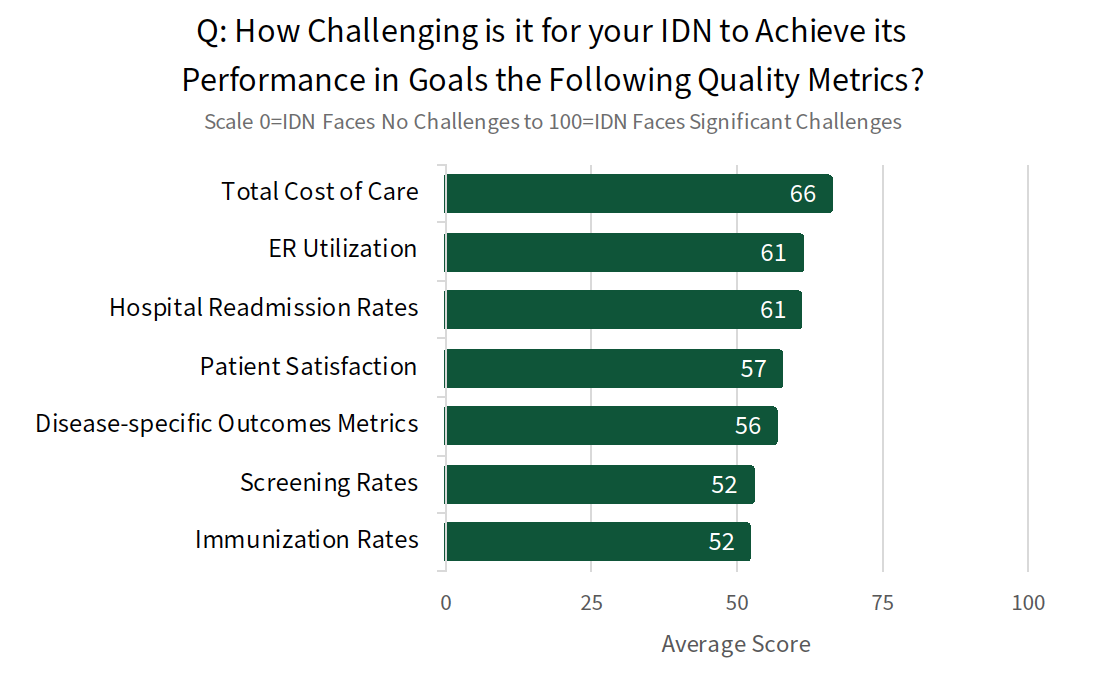
Although immunization rates are considered less challenging, IDNs report greater levels of vaccine hesitancy in recent years.The full report examines IDNs' successes and opportunities for improvement in quality and population health in detail.
IDNs Report Lower Success in Meeting Quality Objectives in Behavioral Health & Rare Disease. Improving clinical outcomes is often IDNs' primary objective in most disease categories; however, this can vary. For example, reducing hospital admissions is the leading quality improvement goal in airway diseases and reducing ER utilization is the top goal in behavioral health. IDN respondents rate highest levels of success in meeting their quality goals for oncology/cancer, ophthalmology, vaccines, and cardiovascular disease.
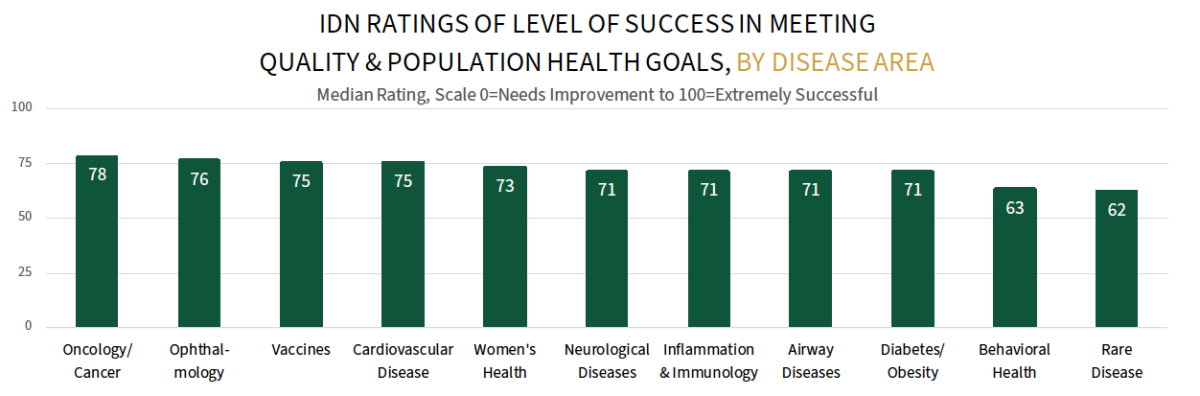
Perceived success in meeting quality performance objectives by therapeutic area has been relatively stable since 2023, with ophthalmology showing a notable improvement in 2025 and behavioral health and rare diseases continuing to under perform.The complete report delves into IDNs' disease-specific challenges.
Pfizer Recognized by IDNs for Most Meaningful Quality and Population Health Engagement. IDNs were asked to nominate a pharmaceutical manufacturer that stands out in most meaningfully supporting their quality/population health management goals over the last 12-18 months. Pfizer receives the most nominations, followed by GlaxoSmithKline, Lilly, and Merck. Leading manufacturers are providing IDNs with a range of educational, adherence, and community health initiatives.
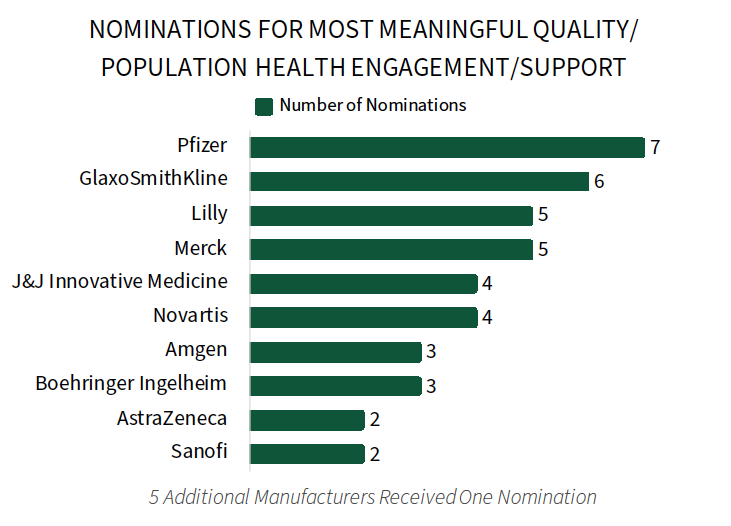
The complete report reviews example collaborations, partnership opportunities, and priority disease states for manufacturer support.
Research Methodology and Report Availability. In July/August, HIRC surveyed 53 pharmacy directors, medical directors, and quality/population health personnel from IDNs ranging in size and geographic location. The full report, Integrated Delivery Networks: Quality and Population Health Management Goals and Initiatives, is part of the Organized Providers Service, and is now available to subscribers at www.hirc.com.
Download a PDF of these Highlights
Download Full Report (Subscribers only) >