
Pharmacy Benefit Managers: Contracting Landscape and Manufacturer Competitive Assessment
Highlights of the report:
Download a PDF of these Highlights
At a time when the PBM market is under heightened regulatory scrutiny and contracting practices in transition, HIRC's latest report provides a clear snapshot of where manufacturer-PBM relationships stand today. HIRC's report, Pharmacy Benefit Managers: Contracting Landscape and Manufacturer Competitive Assessment, reviews pharmacy benefit manager executives' evaluation of manufacturer engagement and focuses on trends in contracting. The report addresses the following questions:
- Who do PBMs select as their overall manufacturer partner of choice, and why?
- How do 30+ manufacturers rate in presence and willingness to contract with PBMs?
- What is the status of PBM-owned GPOs and how successful are they perceived to be? What types of fees are they charging manufacturers?
- What is the status of the contracting environment (contract prevalence, type, most common rebate/discount amounts) across 20 therapeutic areas?
- What is the status of alternative contracting approaches, such as portfolio, risk/outcomes, and indication-based arrangements?
Key Finding: PBM contracting remains rebate-driven, but the economics are evolving: PBM-owned GPOs are increasingly embedded in negotiations and collecting fees, while manufacturers are leveraging portfolio-based approaches to defend access.
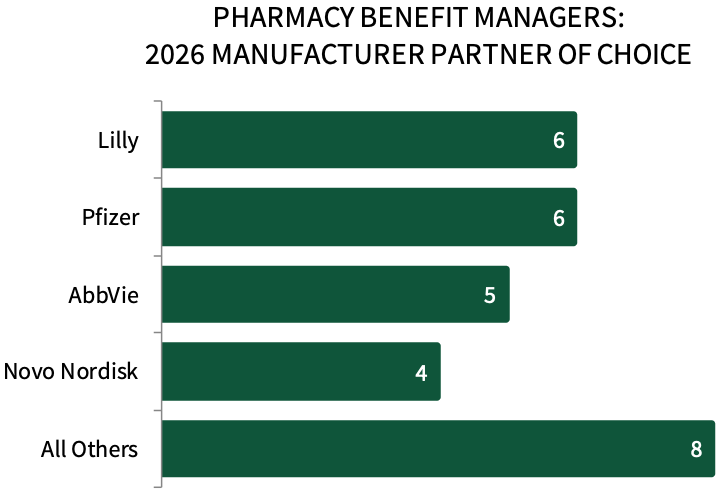
Lilly Continues to Lead as Pharmacy Benefit Managers' Top Overall Partner of Choice. PBM key decision-makers were asked to nominate a single manufacturer as their overall partner of choice in 2026. Lilly receives the most partner of choice nominations for the second consecutive year, followed by Pfizer, AbbVie, and Novo Nordisk. The primary factors driving nominations include demonstrating an understanding of customer's business needs and a firm's account management support/personnel.
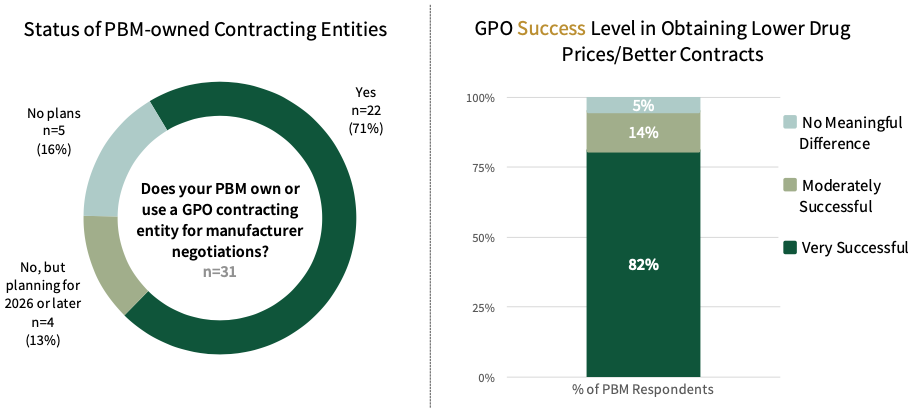
PBM-Owned GPOs are Often Involved in Manufacturer Negotiations. About 71% of PBM respondents in HIRC's sample report that their organization currently has a separate GPO contracting entity that handles manufacturer negotiations. In addition, 82% of panelists rate their GPO as 'very successful' in its ability to obtain lower drug prices and/or secure better contract terms. The full report further provides a deeper analysis of PBM-owned GPOs, including the types of fees most commonly charged to manufacturers.
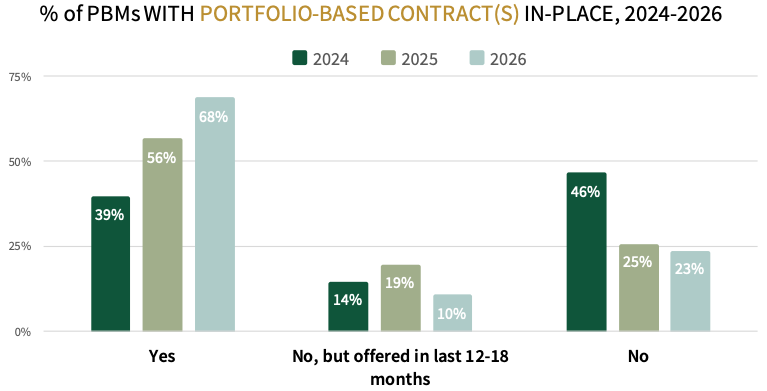
Portfolio-based Contracting is on the Rise. HIRC asked PBM executives to report on their participation in novel contracting approaches, including portfolio, risk/outcomes, and indication-based agreements. Adoption of portfolio-based contracts has steadily increased year-over-year, rising from 39% of panelists in 2024 to 68% in 2026. These arrangements are most frequently utilized in I&I, airway diseases, and obesity/diabetes (GLP-1 agonists). The full report examines the status of risk/outcomes & indication-based contracts, in addition to the prevalence of traditional rebate contracts & rebate/discount amounts across 20 therapeutic areas.
Research Methodology and Report Availability. In December 2025 and January 2026, HIRC surveyed 31 pharmacy benefit manager key decision-makers from very large, mid-size, and small/upcoming PBMs. Online surveys and follow-up telephone interviews were used to gather information. The complete report, Pharmacy Benefit Managers: Contracting Landscape and Manufacturer Competitive Assessment, is available now to HIRC’s Managed Markets subscribers at www.hirc.com.
Download a PDF of these Highlights
Download Full Report (Subscribers only) >